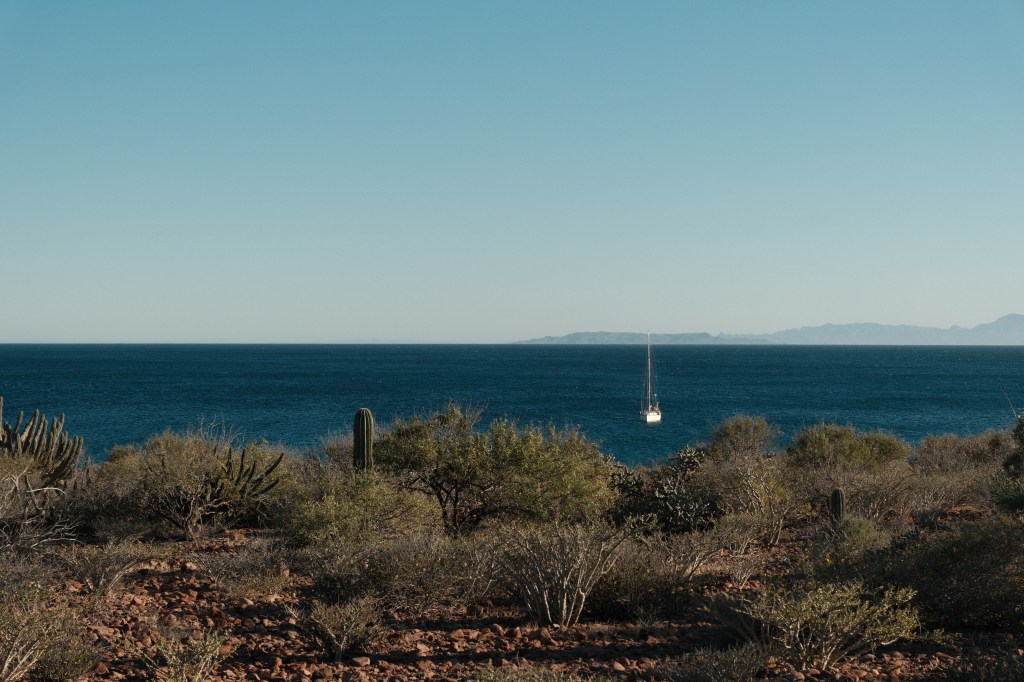
Finally the day came where we had to decide where we wanted to hide out from the Northerly that was going to sweep down the Sea of Cortez. Jesse picked the Punta Perico anchorage on the Northern tip of Isla Carmen. It had a big sandy anchorage area, and if we did end up getting blown away by the forecasted strong winds, we’d be blown out to the Sea of Cortez and not into any land, so it sounded like a great spot. We arrived at the anchorage during the golden hour and were quite happy with our choice.
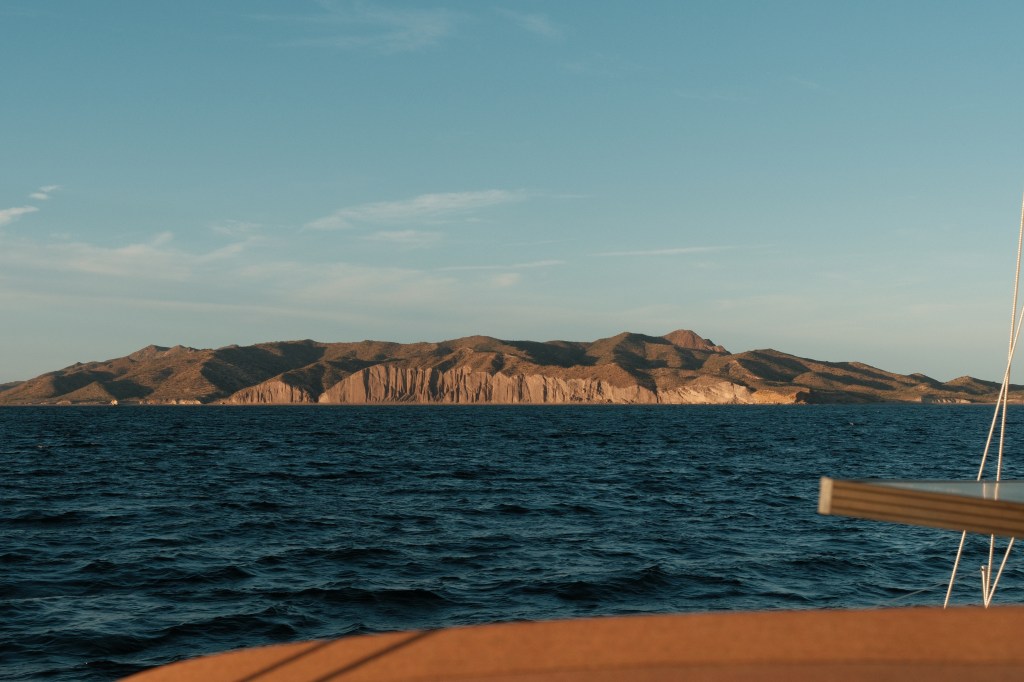
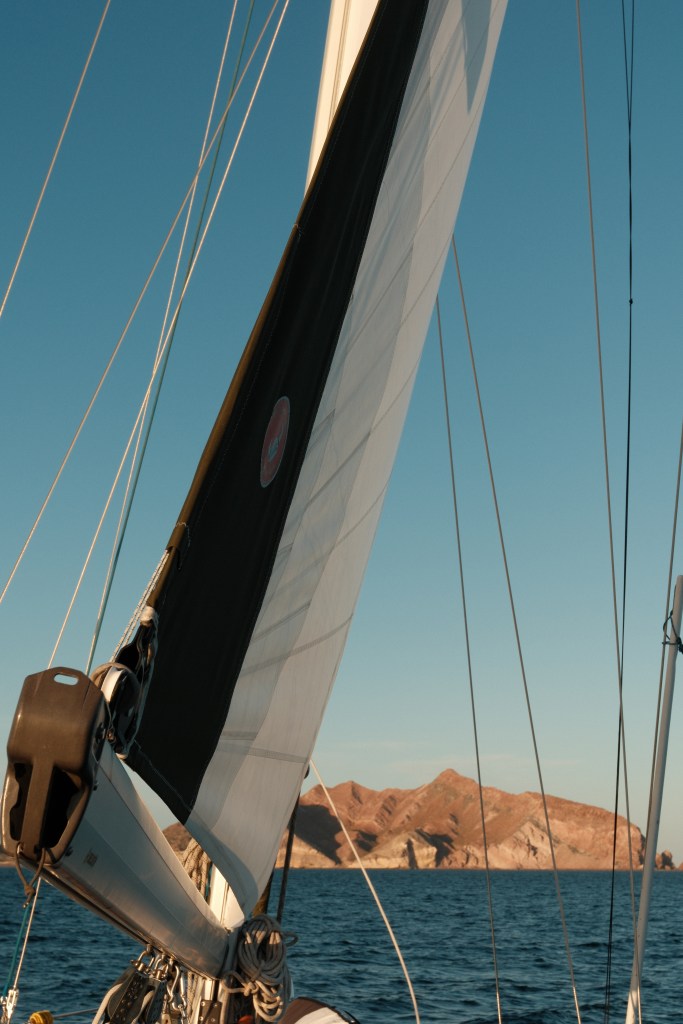
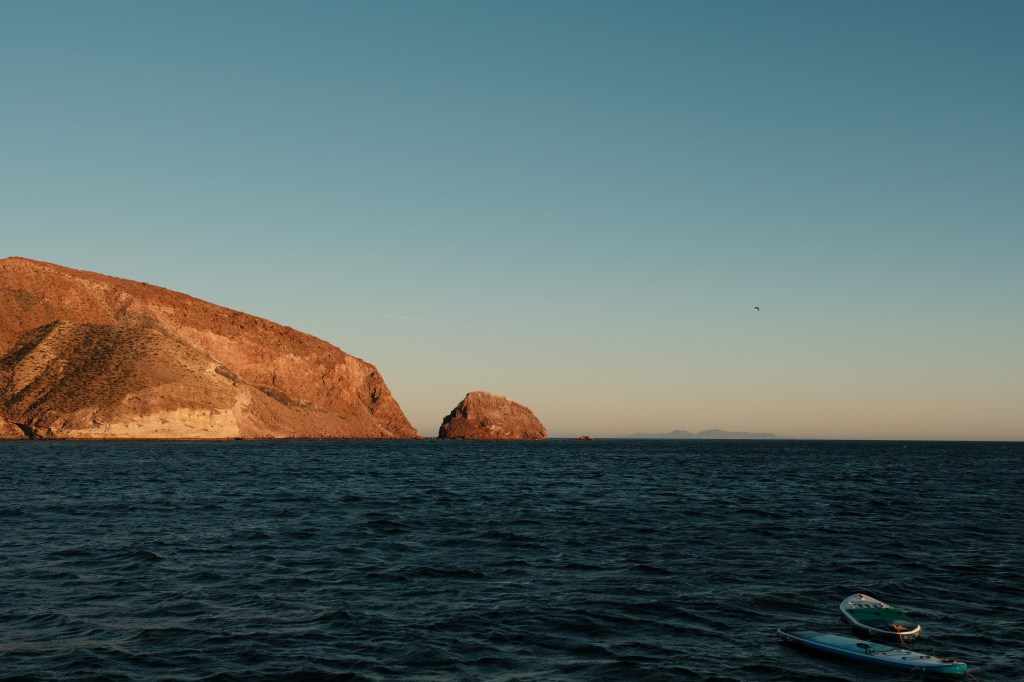
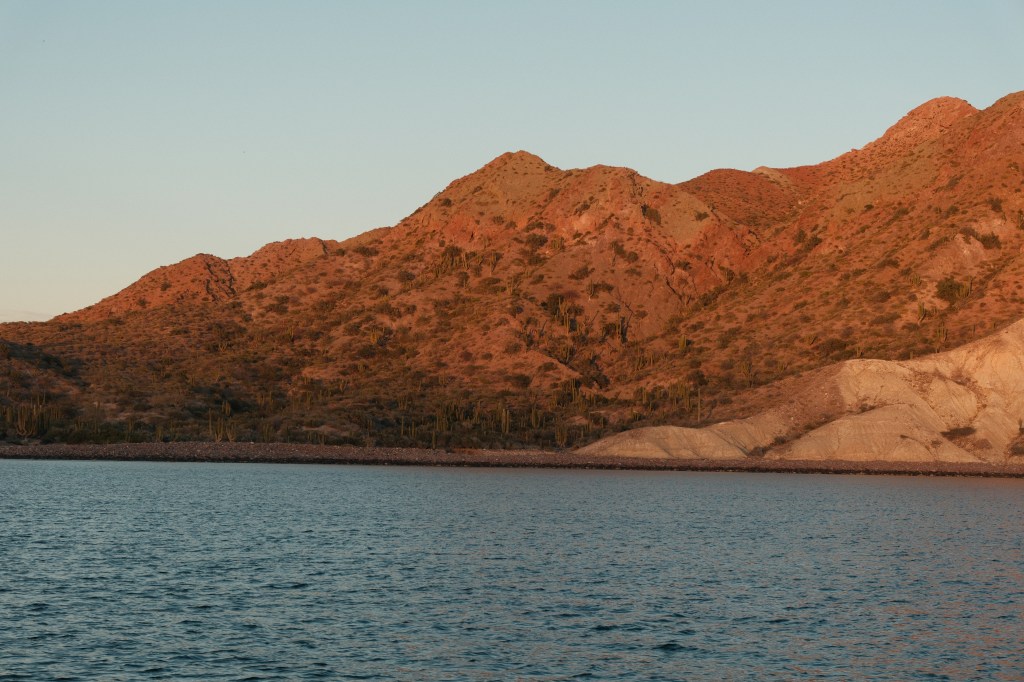
We spent the next two days on the boat at anchor yawing back and forth in winds gusting up to 35kts.
When we know the weather is going to be heavy while we’re at anchor, we set multiple anchor alarms with varying radiuses that will go off if our boat is pushed outside the preset area. Anchor alarms also go off when you don’t get the radius set quite right. They go off if the battery of the device running the alarm gets low. They go off if the initial distance to your anchor was estimated inaccurately. They go off if you leave the app on the wrong window and the screen goes off. They go off if GPS connectivity is interrupted. Suffice to say, we are very familiar with the blaring “ERRRRR ERRRRR ERRRRR” and “UNNNNNN UNNNNNN UNNNNN” alarms waking us in the night. We’ve never dragged anchor once yet though.
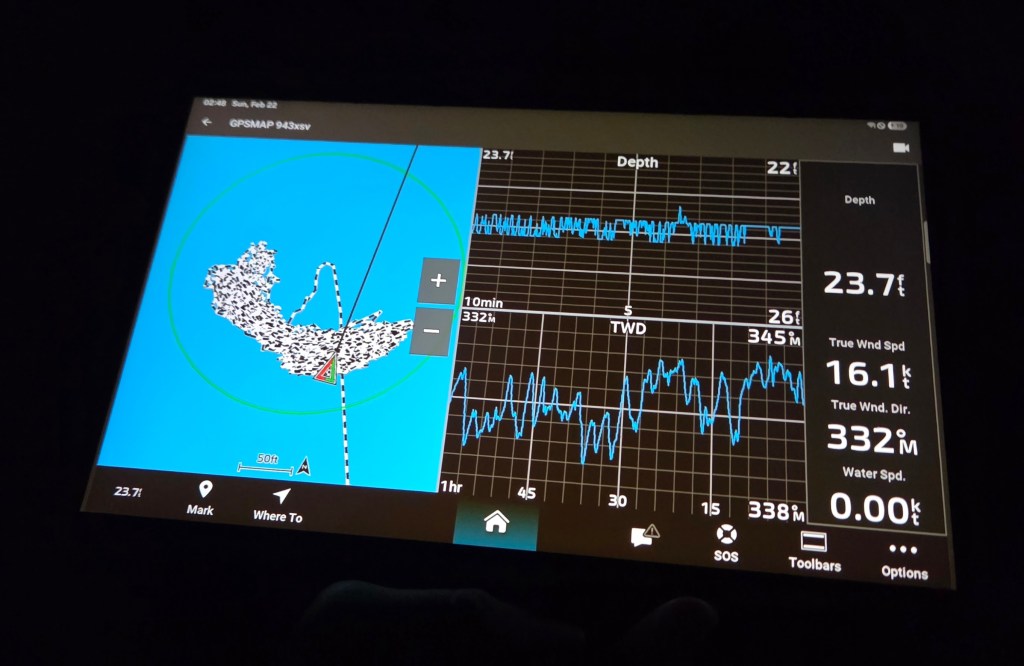
Three times during this pin down, I got stir crazy and suggested we take a sojourn to land when the winds would let up. Jesse would agree and we’d gather our stuff, put our sunscreen on, and go to hop on the paddle boards and the wind would whip back up, thrashing the big boat back and forth, the paddle boards helplessly flapping around in the wind tethered to the back of the boat, and our plans would be foiled. Defeated, we’d go back down below, wash off the sunscreen, and resume our prior indoor tasks.
Our indoor tasks included replacing all of the hose clamps with rust in the bilge with freshies, detail cleaning and inspecting every nook and cranny of the engine (we’re talking toothbrush and q-tip cleaning), and inventorying our deep spares to triple check the exact parts we have and confirm we have all the connecting bits and gaskets and tools to actually swap them out in case they’re needed.
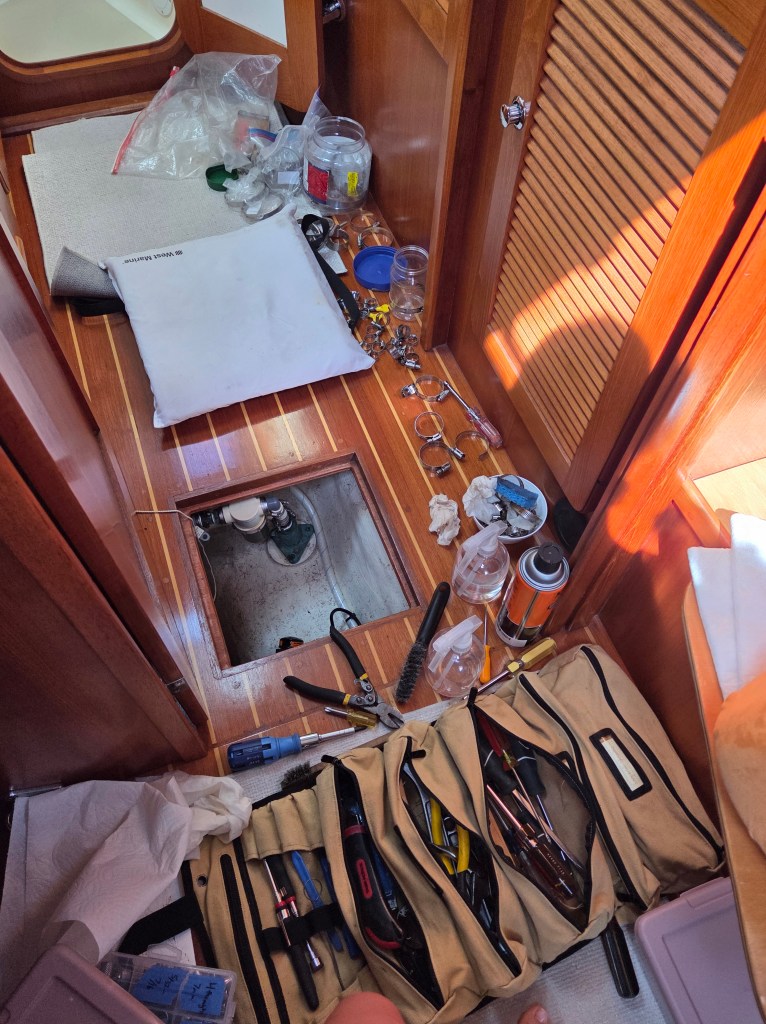
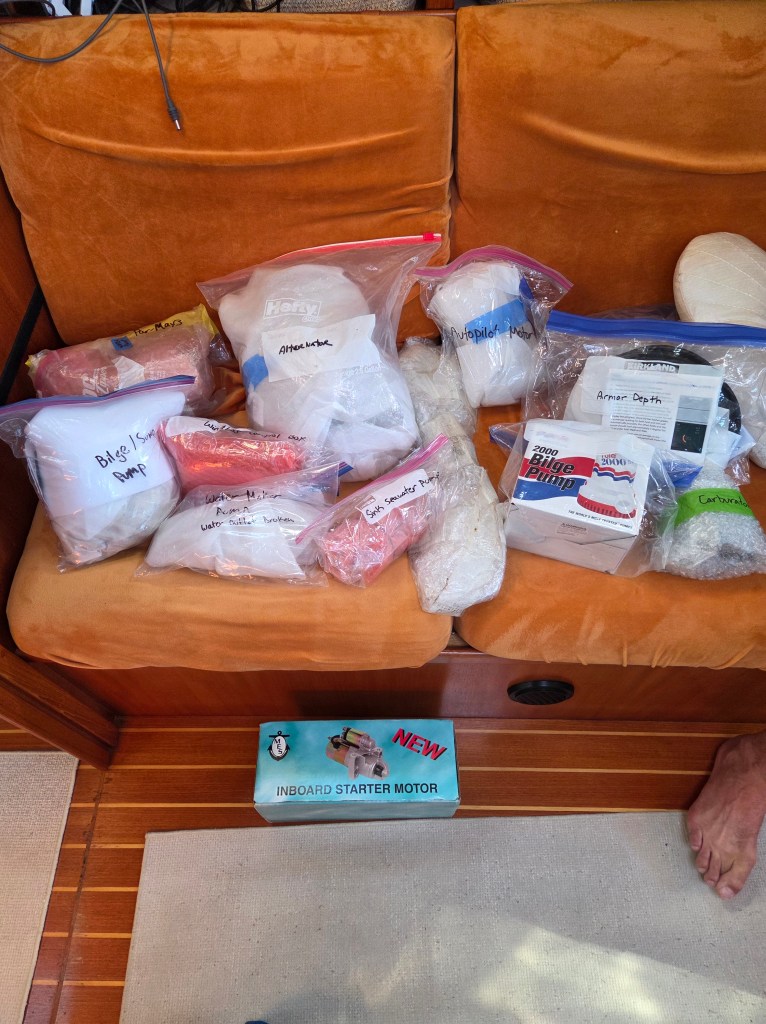
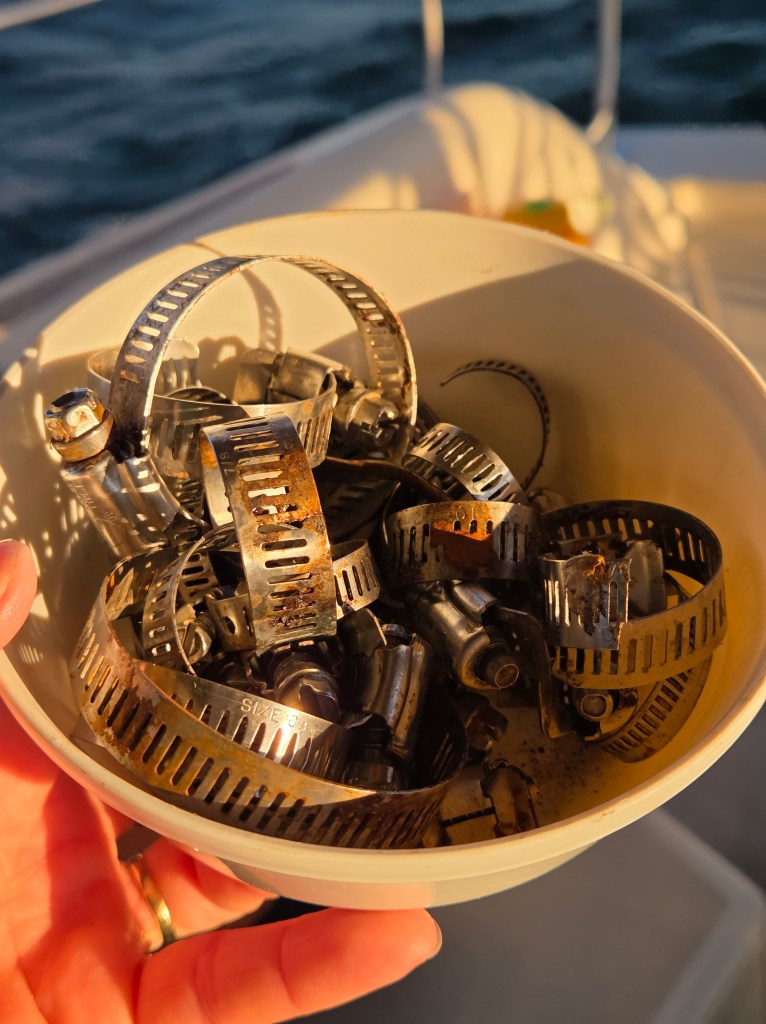
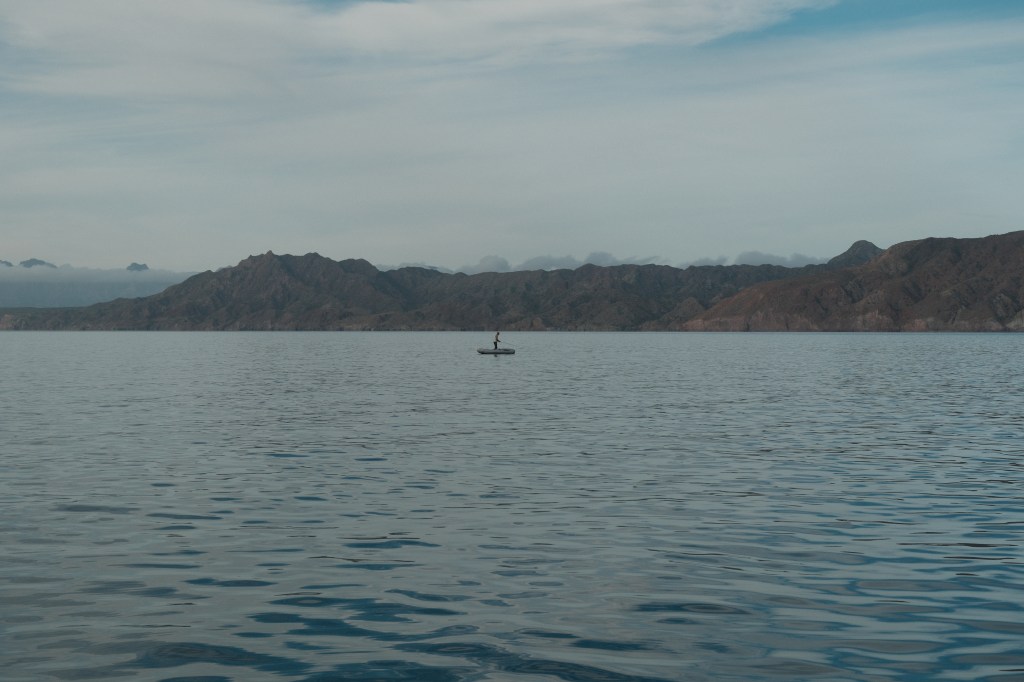
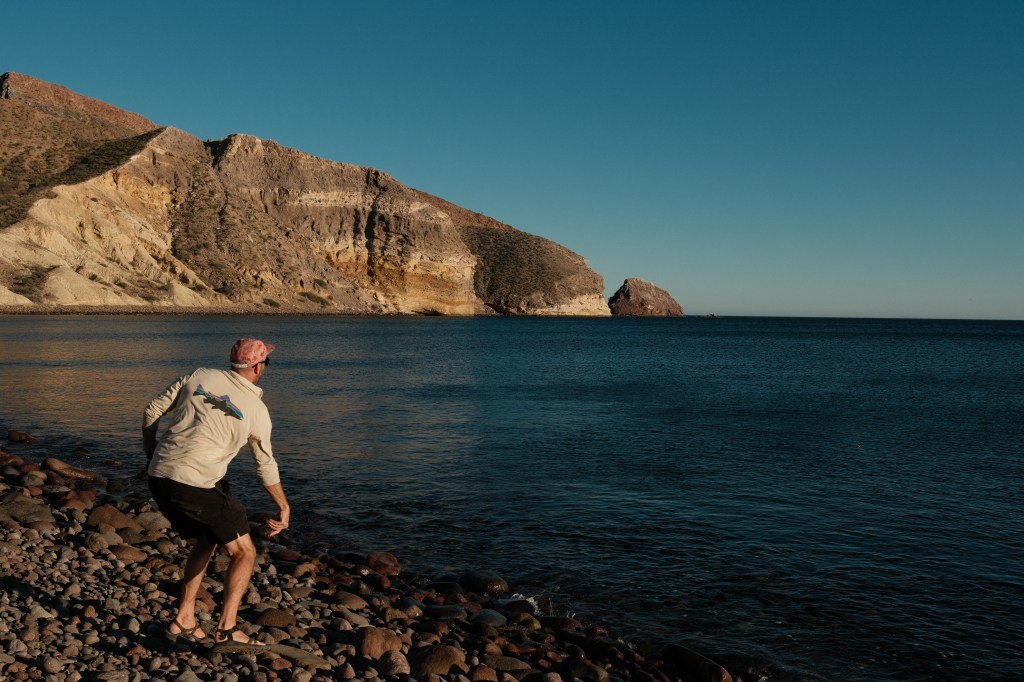
Finally on the third day, the winds let up enough for us to journey to land – we took the dingy so the engine could over power the remaining wind more efficiently than our paddles. The beach landing was big rounded river rocks, and after almost a week on the boat, we were falling all over trying to walk across the rocks. Took us a quarter mile before we had our feet properly under us. I imagine we’re going to have to start with crawling once we hit land after the Pacific crossing.
 Ophelia Offshore
Leave a note in the logbook