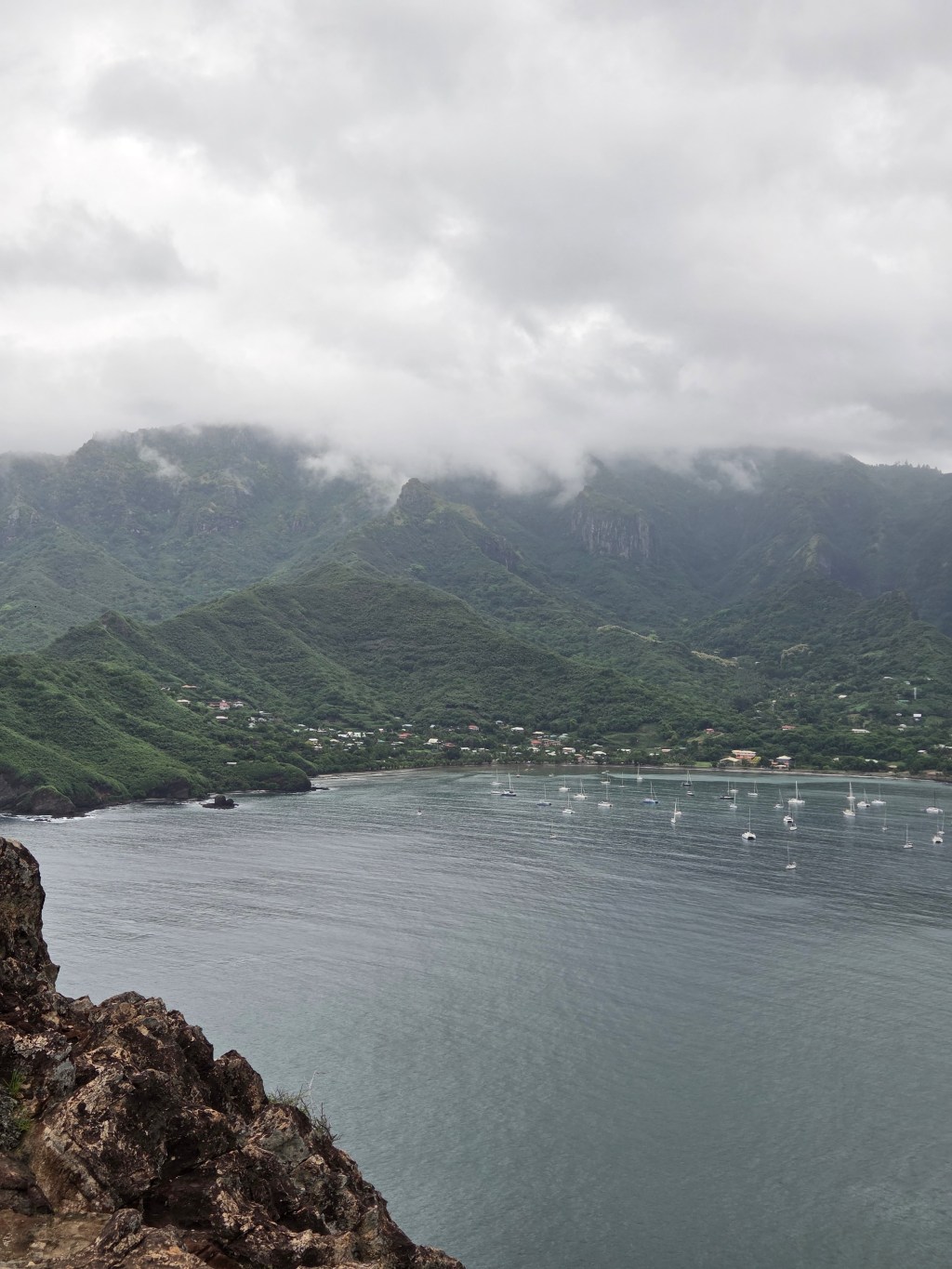
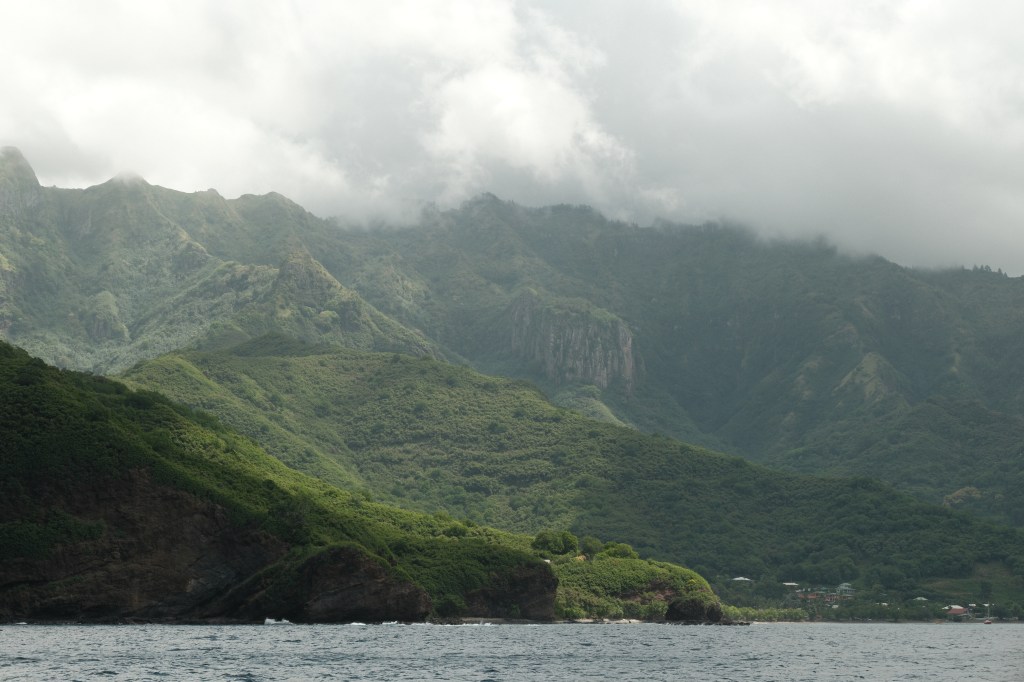
After 24 days at sea, landfall anywhere would be spectacular. But I’m pretty sure the island of Nuku Hiva is spectacular in it’s own right. In order to enjoy the specter however, we had to conquer the dingy dock – “dock” being a relative term. It was a concrete peer jutting ten feet straight out of the water with a surge of varying strength depending on the tide and swell. The thoughtful people who installed a stainless steel ladder to assist in offboarding had not contemplated the ongoing maintenance of their installation – it was only partially connected to the peer, with various joints and bolts rusted through fully and separated. On the first evening we attempted to set foot on land, there were 30 or more dinghies tied to the peer, four deep, slamming against the cement wall and each other. At the time we did not know this, but the fishermen bring their catches to this pier, and throw in the fish innards and heads, turning the area into a shark feeding frenzy. So it’s very important you don’t drop anything, and most definitely don’t fall in, while navigating this obstacle course.
Since it was the evening and no supply ship was expected, we opted to tie off to the supply ship’s docking spot with less surge and only a few dinghies. The challenge of this spot was it was much taller, and required scaling the wall over a giant, decaying tractor tire that was lashed to the pier as a makeshift fender. Each of us took a turn standing on the bow of the dingy, waiting for a big surge to launch us upwards so we could jump up into the tire and scramble our way over, desperately grasping for finger holds in the slippery treads of the tire. The black bean couscous and curry fried rice we were bringing for the potluck took their own turns, each handoff timed with a big surge.
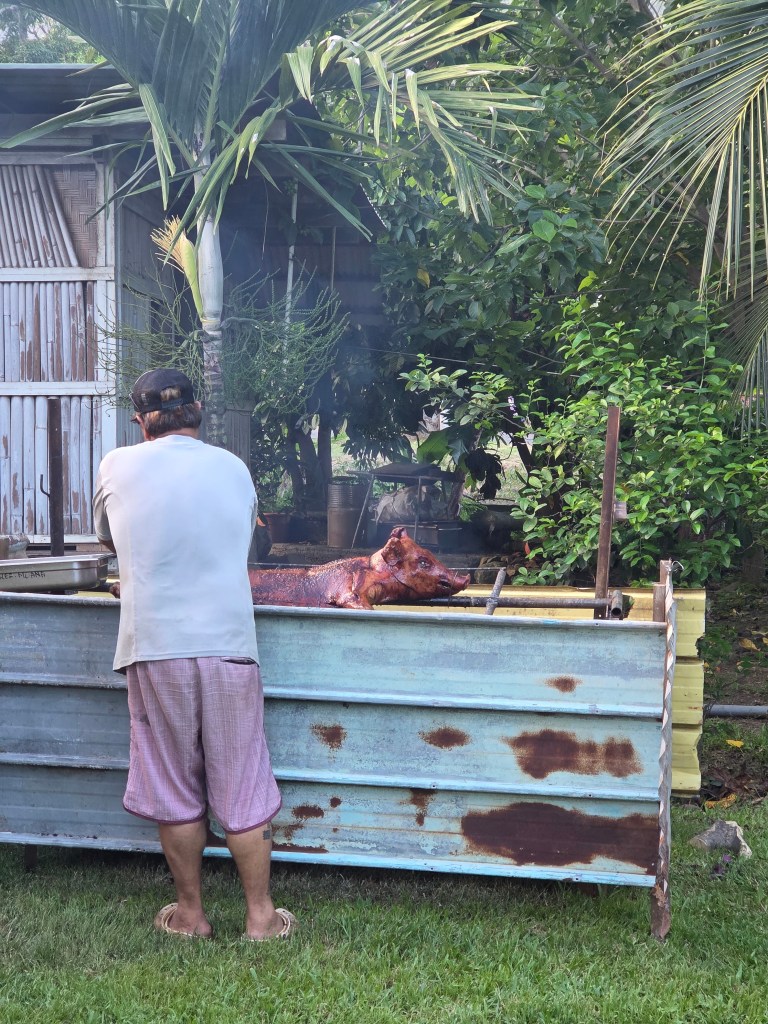
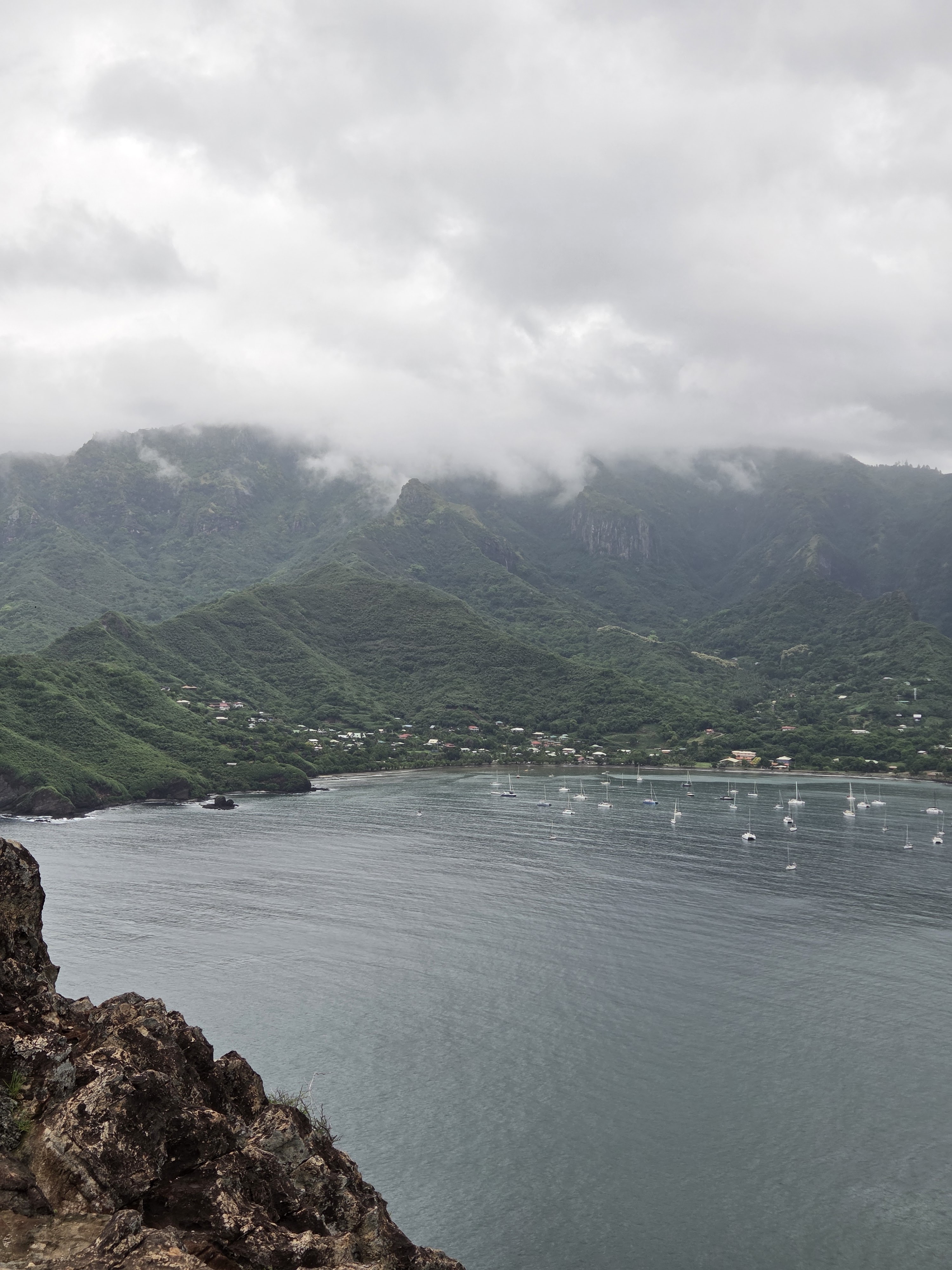
Once our feet were firmly on ground, the queasiness hit us – the total lack of movement was a shock to the body and psyche. Thankfully we had a celebratory pig roast for cruisers who had crossed the Pacific this season to head too which kept our feet moving, one in front of the other as we walked the picturesque waterfront of Taiohae. Months later as I recall this landfall, I can still see every tree we passed, every shrub growing into the sidewalk, every flower that had fallen to the ground. The variety of plants, so much to look at, not just another blue swell, was a welcome overload.
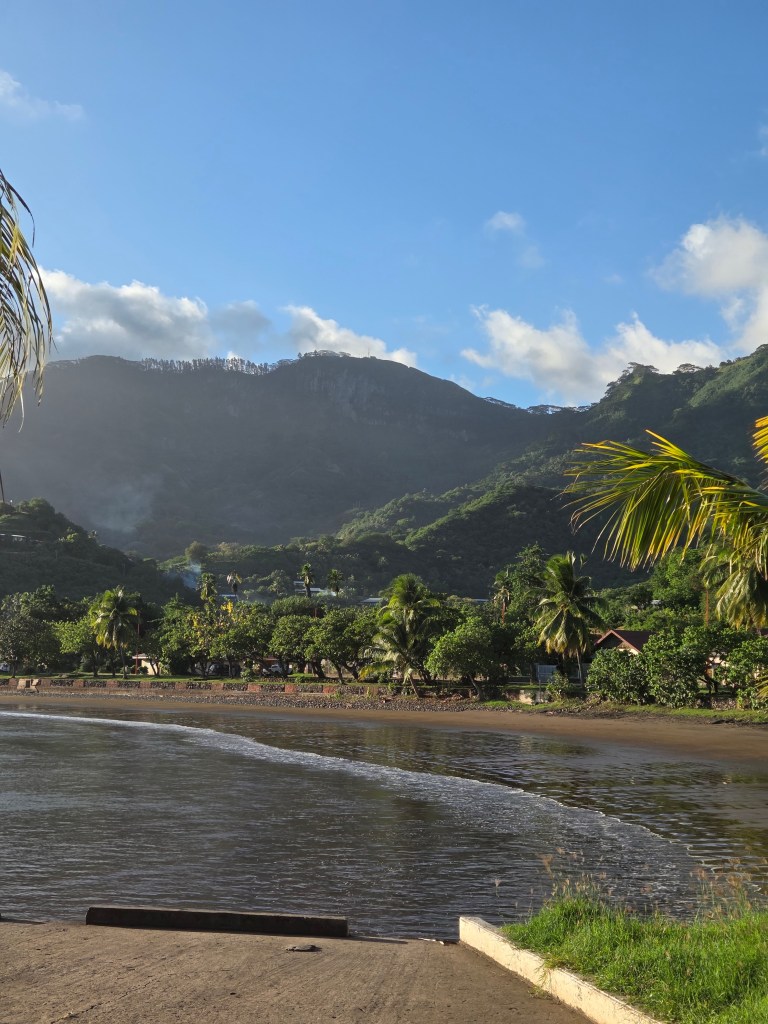
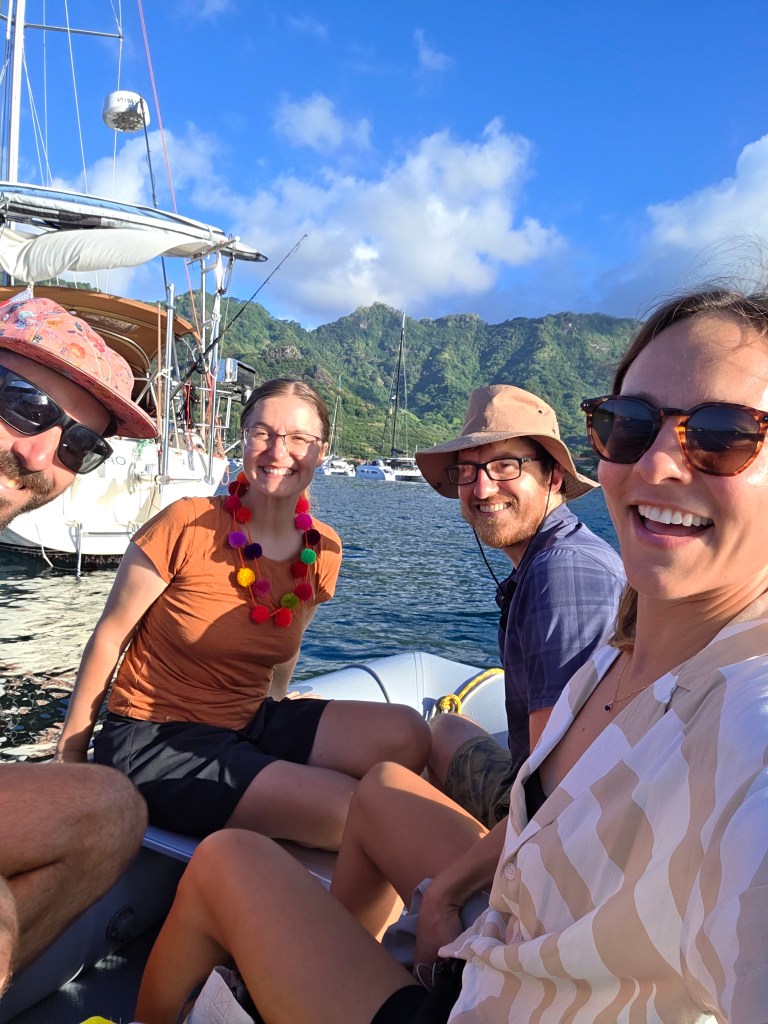
We went to land every day, getting better and better at the dingy landing until we were cruising into the middle of the pack of tied up dinghies, lashing the bow line to the chains on the wall, walking across the other dinghies as if it was stable dock, and scaling the ladder without a single misstep or pause. We watched new arrivals hesitate as they approached the situation, as if it was difficult, and shook our heads at their naiveté.
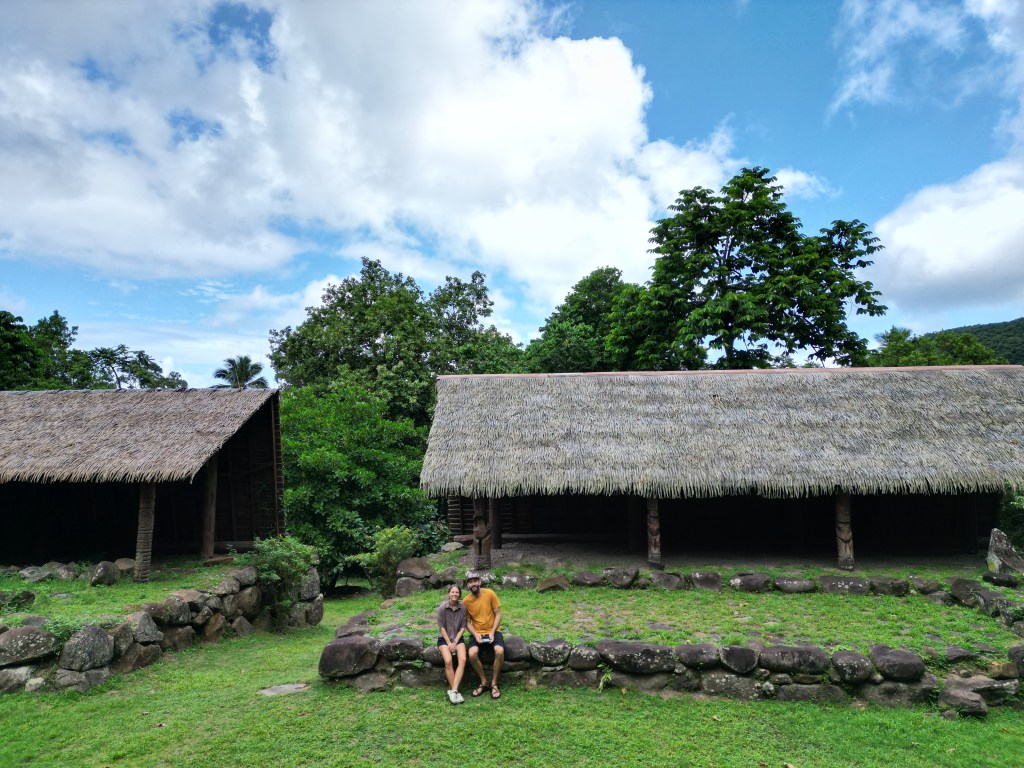
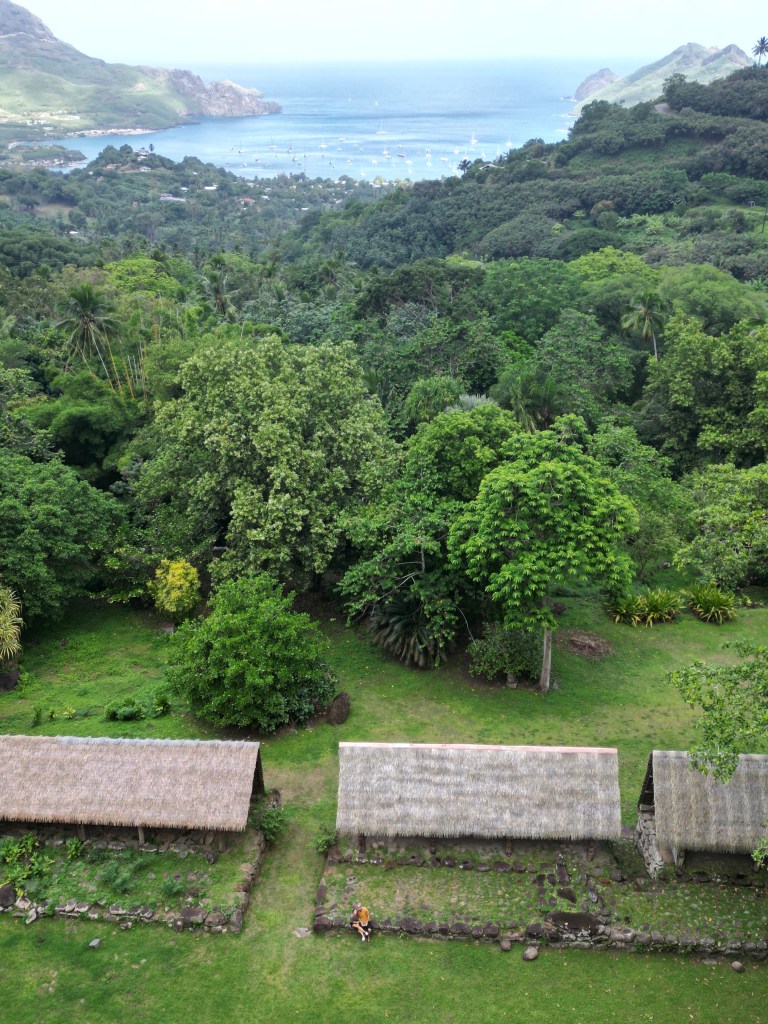
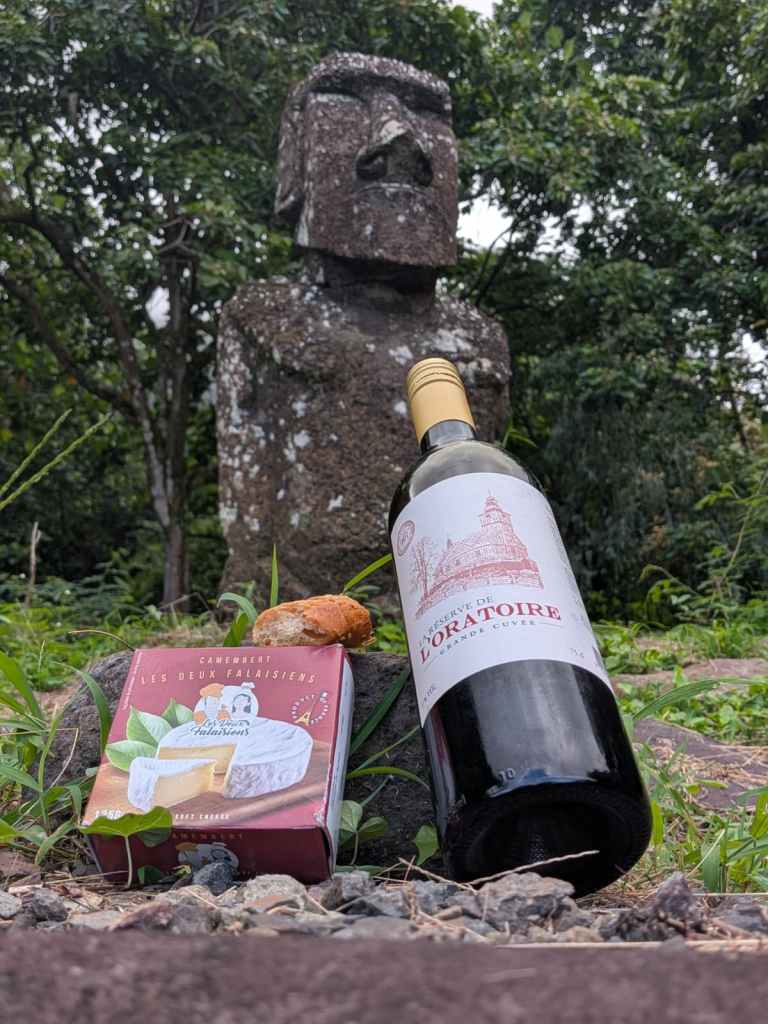
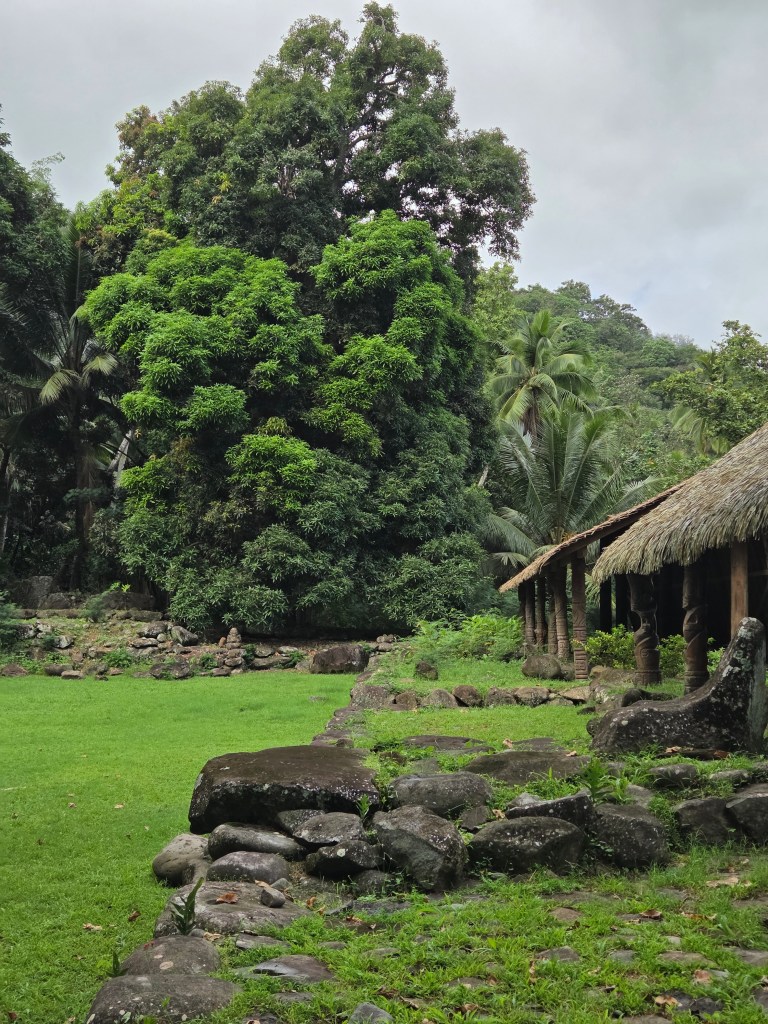
While we had mastered the dingy landing, we had not fully mastered being creatures of the land again. We took a walk through town out into the woods (the jungle? it was a mix of both) to visit a Marquesan archeological site, with traditional wooden structures reconstructed on ancient stone ruins. With our baguettes poking out the top of our daypacks and French wine in the water bottle holders, we were excited for out picnic, and unaware we were also bringing a picnic of flesh and blood. The ruins where incredible, the baguette with butter and wine swigged from the bottle enough of a distraction that we didn’t notice the swarms of mosquitos making their own picnic of us. Once we did notice, we ignored them and continued on our tour of the ruins – getting our drone shots, exploring the interiors of the structures, picking out which hut we would have chosen to inhabit. We had all forgotten how awful mosquito bites turn after the fact. For the next week we walked around covered in swollen bites and hydrocortisone gel.
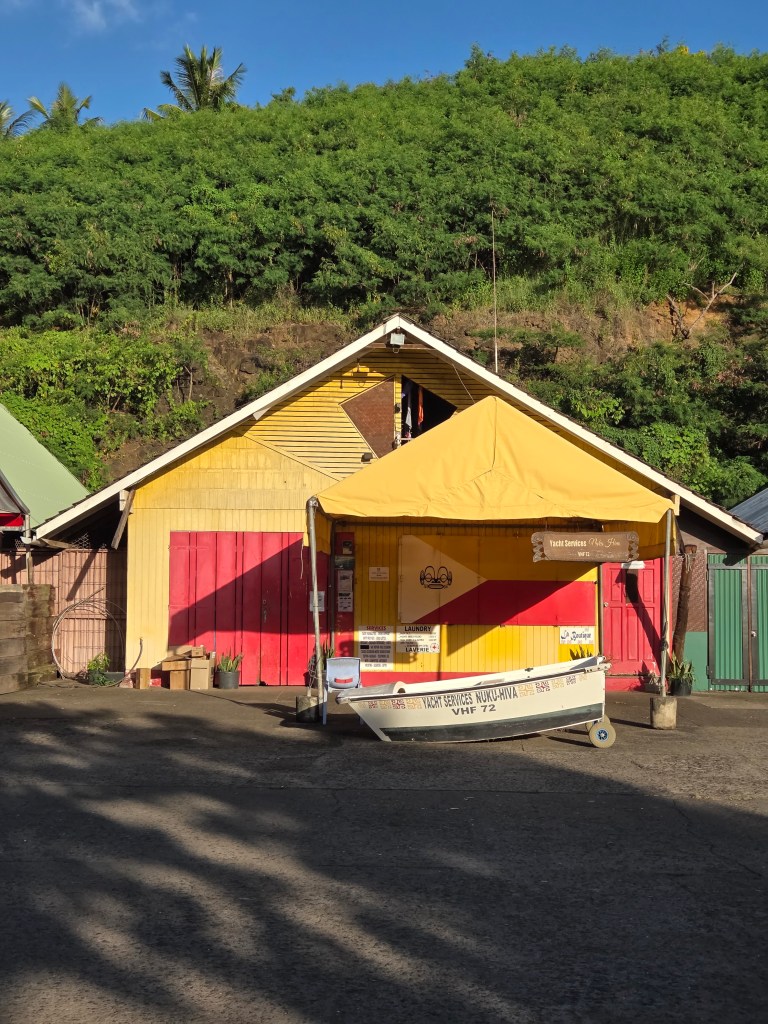
There was a chandlery, a “pizza” spot, and a few small markets for getting food. A food truck that serves the local fare – stake frites (tuna or beef), poisson cru (raw tuna marinated in coconut milk), and chow mein – the classic French Polynesian menu trio seen across all the towns we’ve visited – was the first meal out we had. Many chores were completed – laundry, cleaning the hull, refilling propane, minor boat repairs. Meals were taken out in town, reservations required for the “pizza spot”. And of course, there was bird watching.
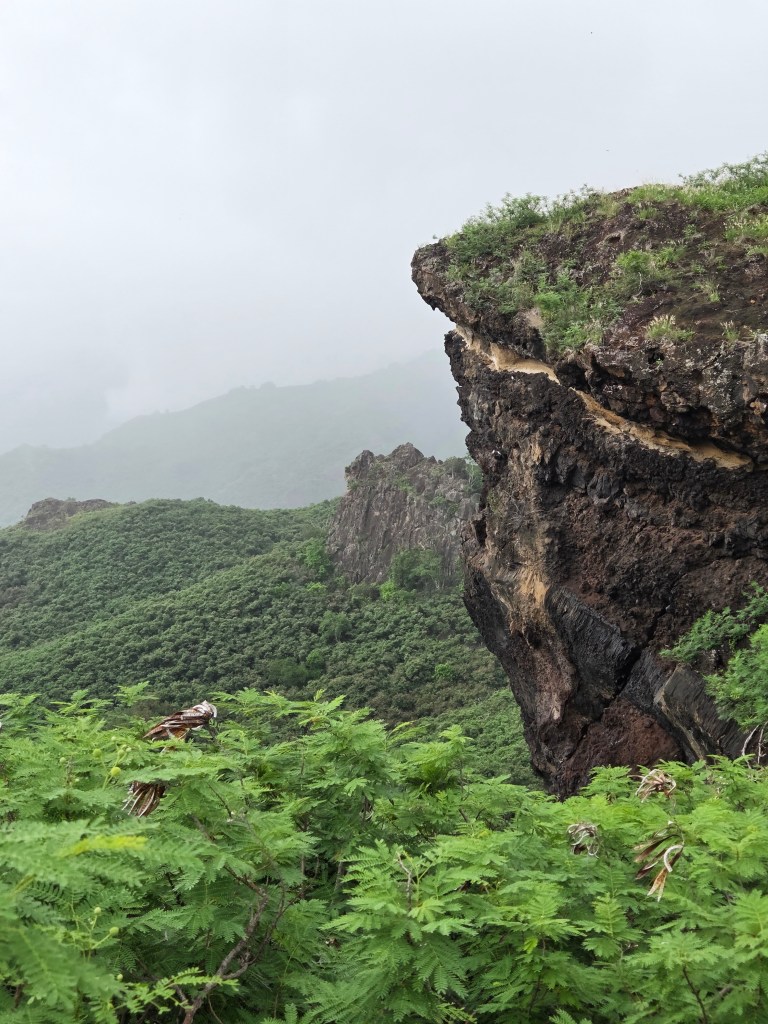
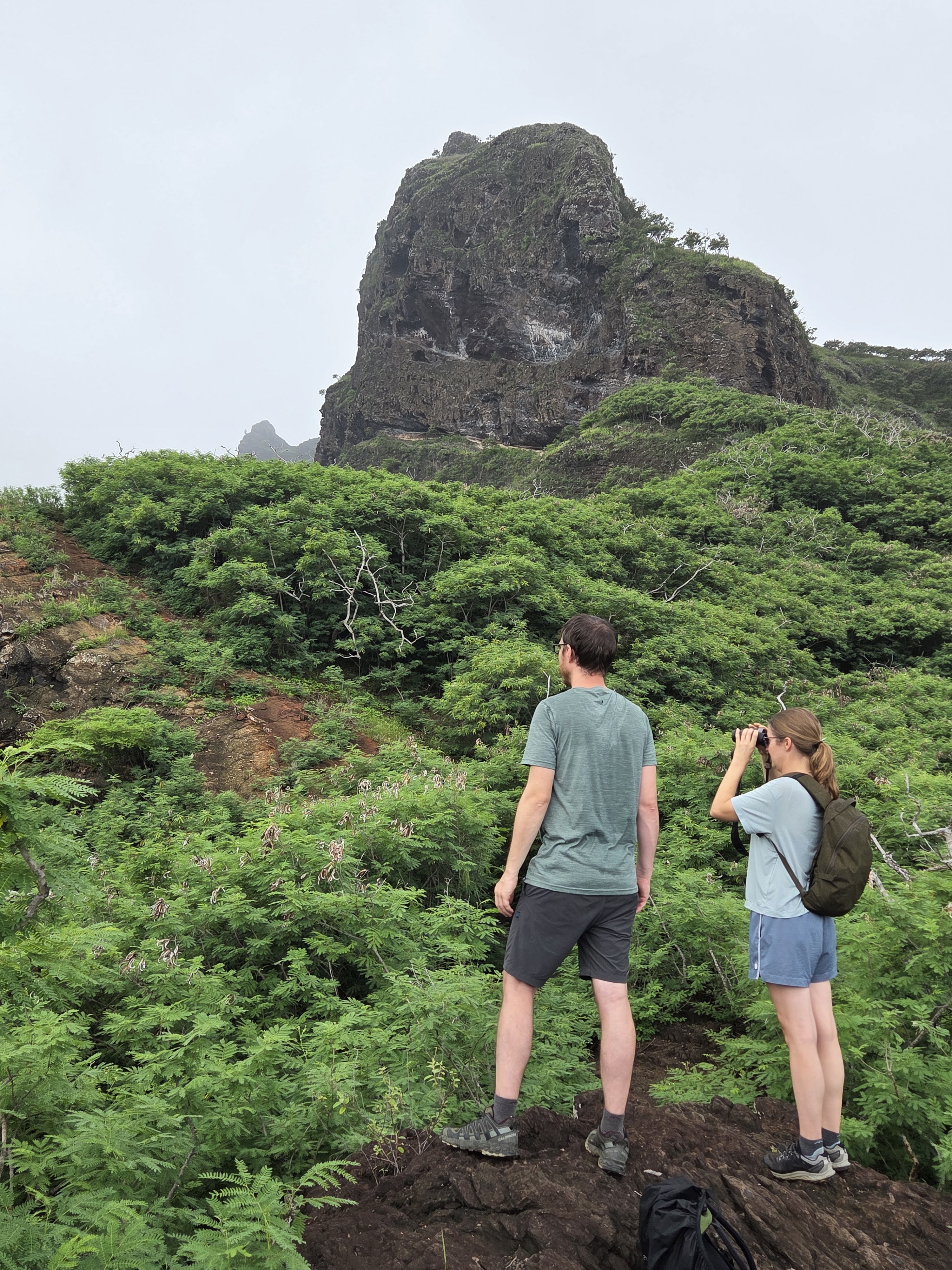
Every day the rain came on and off, so our battle against water intrusion into the cabin continued. Taiohae is situated in a large valley surrounded by jagged peaks that create their own weather. We were bested one day by a massive massive rain storm.
We were all on land – Jesse and I were picking up Dirk and Sarah who were re-joining us on the boat after a few days at a pension on land. As we reached the dingy pier, a light rain started and we decided to sit it out under a tree.
The rain kept coming, Dirk and Sarah shifting their luggage further and further under the shelter of the park picnic gazebo.
The rain came down harder and harder.
We moved to the proper shelter of a snack kitchen’s tented dining area. The rain continued to fall.
We ordered coffee, served in small glass bowls.
Locals began to join the tourists under the dining tent – apparently enough rain was now coming down to warrant taking shelter.
We ordered fried chicken and frites. The punishing rain continued past the hour mark.
Eventually Jesse left to dingy back to the boat – both to make sure the dingy didn’t get fully swamped and to close the vented hatches, an effort that was too little too late. He employed every towel and rag on the boat in the mop up effort. Our plans thoroughly bested for the day, we eventually all headed back to the wet, steamy boat.
It was time to get the hell out of Taiohae.
 Ophelia Offshore
Leave a note in the logbook